High-stakes technical failures often push users into panic mode, leading to conversational collisions, ignored instructions, or pushback against standard procedures. Knowing how to handle these tense moments separates great support specialists from average ones.
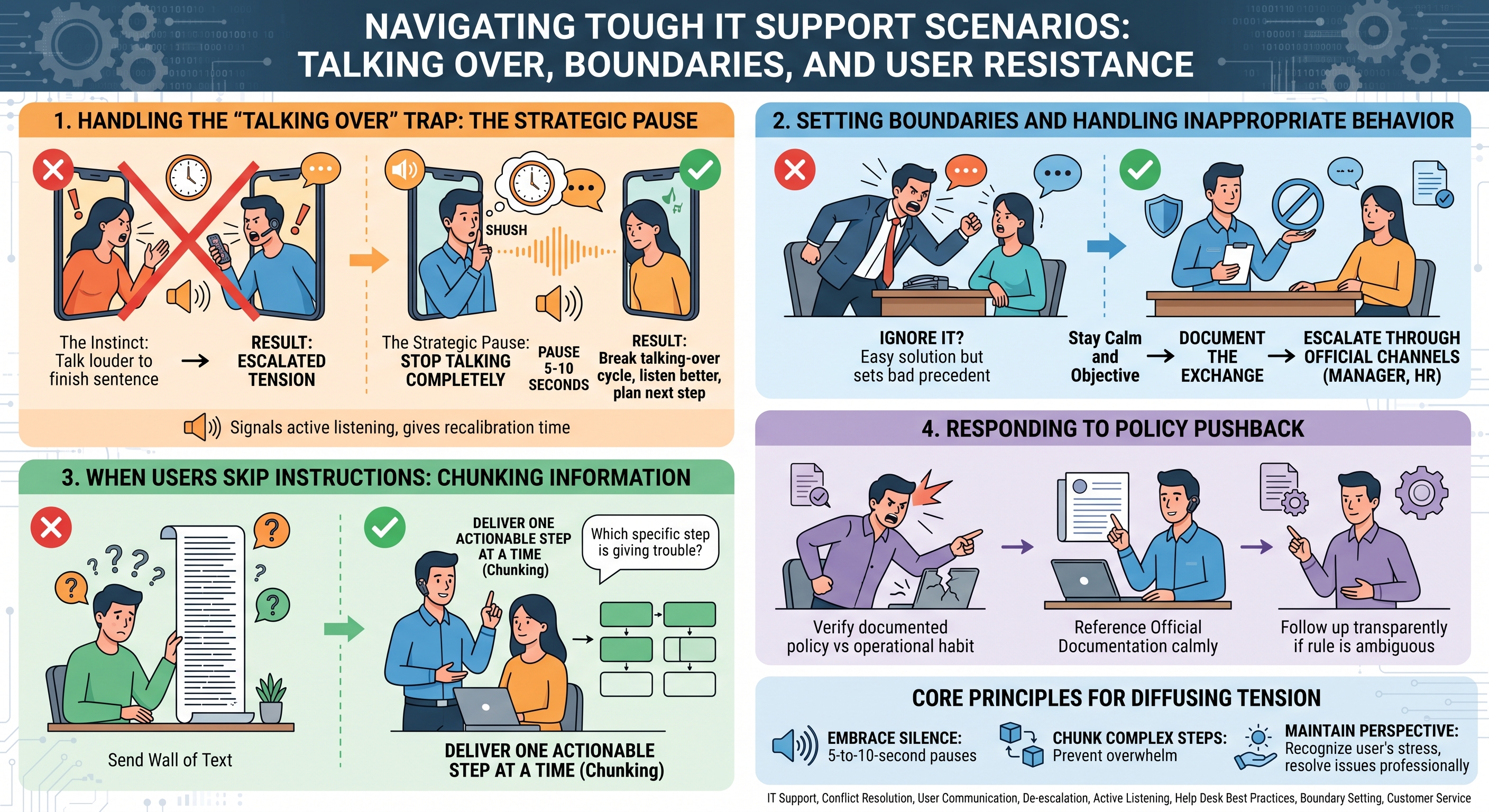
1. Handling the “Talking Over” Trap: The Strategic Pause
Whether due to audio latency on remote calls or sheer user panic in person, people often start speaking at the same time. When both parties fight to be heard, volume rises and communication breaks down.
- The Instinct: Trying to talk louder to finish your sentence. (This always escalates the tension.)
- The Strategic Pause: Stop talking completely. Let the user finish venting, then pause intentionally for 5 to 10 seconds before responding.
- Why It Works:
- It signals that you are actively listening rather than competing.
- It gives the user a moment to realize they interrupted and recalibrate.
- It gives you time to calm your pulse, analyze what is actually driving their urgency, and frame a clear, concise next step.
Example Script:
“I completely understand the urgency around your upcoming meetings. Could you give me just five minutes for a quick triage? After that, we can immediately discuss our best options.”
2. Setting Boundaries and Handling Inappropriate Behavior
Empathy is essential, but it does not mean accepting abuse or aggressive disrespect.
- Don’t Just Absorb It: Ignoring boundary-crossing behavior sets a precedent where that user continues treating colleagues poorly.
- Stay Calm and Objective: Do not match aggression with hostility. Maintain a steady, neutral tone.
- Escalate Through Official Channels: If an interaction crosses professional boundaries, document the exchange objectively and notify your team lead, manager, or HR department.
3. When Users Skip Instructions: Chunking Information
Users under time constraints frequently skim long knowledge base articles or jump ahead before reading full step-by-step guides.
- Avoid Blame: Information overload, stress, and tight deadlines cause people to miss key details.
- Break It Down (Chunking): Deliver one actionable step at a time instead of sending a wall of text.
- Target the Friction Point: If they skimmed a documentation link, ask:
“Which specific step in that guide is giving you trouble so we can jump right to that point together?”
4. Responding to Policy Pushback
When a user demands exceptions such as an immediate device replacement without standard diagnostics view the pushback through their lens.
- Verify the Policy: Distinguish between actual documented organizational policy and mere operational habit.
- Reference Official Documentation: If a policy exists, explain the business rationale calmly and provide official documentation.
- Follow Up Transparently: If a rule is ambiguous, offer to verify it with management rather than making an arbitrary decision on the spot.
Core Principles for Diffusing Tension
- Embrace silence: Use 5-to-10-second pauses to break talking-over cycles.
- Chunk complex steps: Deliver single, bite-sized instructions to prevent overwhelm.
- Maintain perspective: Recognizing the user’s stress helps you resolve issues without taking frustration personally.