Technical troubleshooting and clear user communication are two of the most demanding yet rewarding aspects of working as an IT support specialist. While diagnosing errors and repairing systems are vital, technology ultimately exists to empower people and improve their daily lives.
As an IT support professional, your role bridges the gap between complex computer architectures and the people who rely on them every day.
The Two Core Pillars of IT Support
- Systematic Problem-Solving
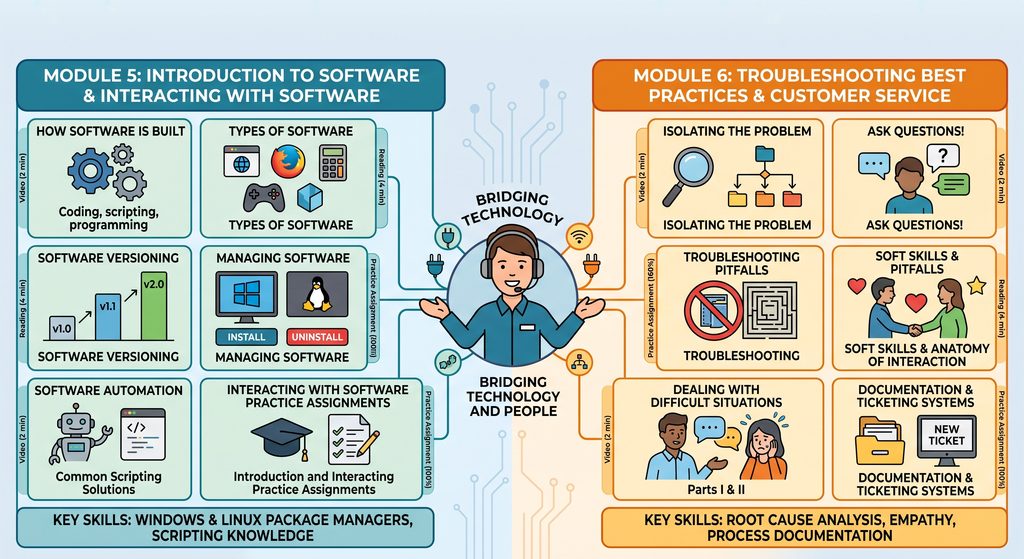
- Root Cause Analysis: Diagnose issues by analyzing causes and effects rather than just addressing symptoms.
- Structured Troubleshooting: Isolate variables, gather context by asking the right questions, test quick fixes first, and avoid common diagnostic pitfalls.
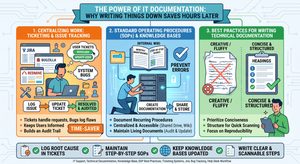
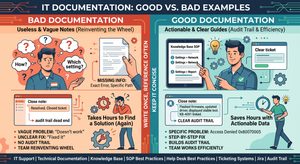
- Documentation: Keep detailed records in ticketing systems and build clear process documentation to resolve future issues faster.
- User-Centric Communication & Soft Skills
- The User Layer: Hardware, operating systems, and software exist to serve the most crucial layer—the user.
- De-escalation: Handle high-stress, critical outages and difficult situations with empathy, patience, and professional clarity.
- Collaborative Innovation: Use daily interactions with end-users as opportunities to identify recurring pain points and design better workflow solutions.
Technical Support Fundamentals: Curriculum Overview
| Module | Core Topics Covered | Key Learning Focus |
| Introduction to Software | Coding, scripting, programming, and software architecture | Understanding abstraction, system vs. application software, and version control. |
| Interacting with Software | Windows & Linux package management and automation | Installing, updating, and removing software via graphical interfaces and command-line tools (such as APT and .exe wizards). |
| Troubleshooting Best Practices | Diagnostic methodology and problem isolation | Asking investigative questions, tracing logs (“following the cookie crumbs”), and prioritizing quick solutions. |
| Customer Service & Documentation | Soft skills, handling difficult interactions, and ticketing | Managing the anatomy of a support ticket and writing reproducible process guides. |
| Career Preparation | Resumes, elevator pitches, and technical interviews | Demonstrating technical competence and customer service acumen in technical interview role-plays. |
Why the Human Element Matters
Whether dealing with core internet routing protocols or consumer-facing creative software, technology delivers value through the people using it. Combining solid technical know-how with empathetic, structured communication turns an average technician into an exceptional IT support specialist.