The cybersecurity industry is constantly evolving, but many present-day attacks are not entirely new. Attackers frequently alter or enhance previous methods, meaning an understanding of past attacks can provide valuable direction for how to handle or investigate incidents in your career as a security analyst.
Before examining historical attacks, it helps to understand core terminology. A computer virus is malicious code written to interfere with computer operations and cause damage to data and software. It attaches itself to programs or documents, spreading and infecting computers across a network. Today, these threats are more commonly referred to as malware (software designed to harm devices or networks).
Two Historic Attacks That Shaped the Industry
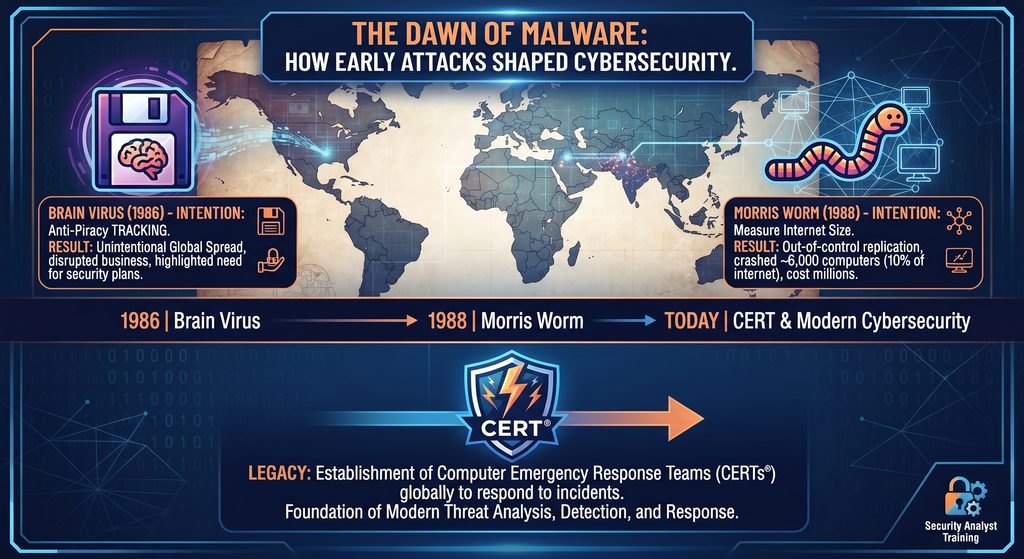
Two early malware examples the Brain virus and the Morris worm were created by developers to accomplish specific tasks, though the creators drastically underestimated their widespread impact and infection rates.
1. The Brain Virus (1986)
- The Origin: Created by the Alvi brothers, the original intention was not destruction; rather, it was designed to track illegal copies of medical software and prevent pirated licenses.
- The Spread: When someone used a pirated copy, the computer was infected, and any floppy disk subsequently inserted into the machine picked up the virus. This allowed the virus to spread globally undetected within a couple of months.
- The Impact: While it wasn’t designed to destroy data or hardware, it slowed down productivity and heavily disrupted business operations. This fundamentally altered the computing industry, emphasizing the critical need for formal security and productivity plans.
2. The Morris Worm (1988)
- The Origin: Developed by Robert Morris to measure the size of the internet. The program crawled the web, installing itself on computers to tally connected machines.
- The Flaw & Impact: The program failed to track computers it had already compromised, continually reinstalling itself until machines ran out of memory and crashed. It affected roughly 6,000 computers about 10% of the internet at the time causing millions of dollars in damages through business disruptions and removal efforts.
- The Legacy: In response to the Morris worm, Computer Emergency Response Teams (CERTs®) were established to handle computer security incidents. CERTs continue to operate today, with vastly expanded responsibilities across the security landscape.
Looking Ahead
Early attacks played an instrumental role in shaping the modern security industry, laying the foundation for detection tools, incident response teams, and organizational defense strategies. Understanding these milestones helps security analysts better prepare for how modern threats continue to evolve in the digital age.