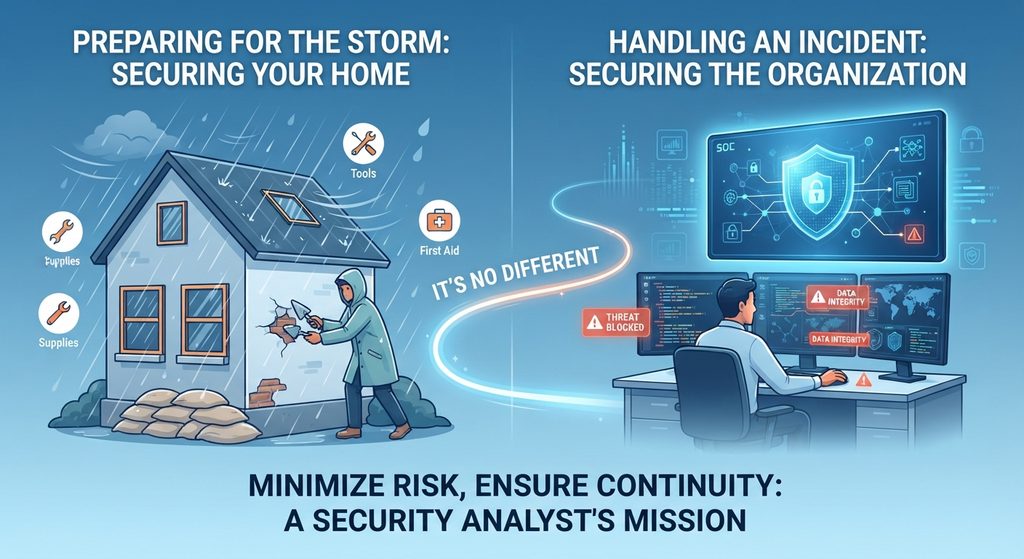
Imagine preparing for a storm. You receive the notification, gather your tools, secure your windows and doors, and stock up on first aid, food, and water. When the storm hits with powerful winds and heavy rain trying to breach your home, you notice a leak. You patch it immediately to minimize damage.
Handling a security incident is no different.
Organizations must prepare for the digital “storm” by ensuring they have the right tools to mitigate and quickly respond to outside threats, with the ultimate objective of minimizing risk and potential damage. As a security professional, the mission is to protect the organization and the people it serves from a variety of risks. And if a threat manages to break through, you and your team are there to provide a swift solution.
Let’s break down what cybersecurity is and how security professionals safeguard modern organizations.
Core Security Definitions
At its heart, cybersecurity (or security) is the practice of ensuring the confidentiality, integrity, and availability of information. It involves protecting networks, devices, people, and data from unauthorized access or criminal exploitation.
- Confidentiality: For example, requiring complex passwords makes it significantly harder for a threat actor to compromise systems.
- Threat Actor: Any person or group who presents a security risk to an organization.
Internal vs. External Threats
Security teams defend against two main categories of threats:
- External Threats: Individuals outside the organization trying to gain unauthorized access to private information, networks, or devices.
- Internal Threats: Risks originating from current or former employees, external vendors, or trusted partners. These can be accidental (such as clicking a compromised phishing link) or intentional (such as unauthorized data access or system abuse).
The Value of Security Teams
Experienced security professionals do much more than just block attacks. They add critical value across the entire organization:
- Regulatory Compliance: Ensuring the organization meets laws and guidelines requiring specific security standards, helping avoid costly fines and audits.
- Business Productivity & Continuity: Establishing business continuity plans so employees can keep working safely, even when disruptions happen.
- Cost Reduction: Minimizing expenses associated with data loss, operational downtime, and legal penalties.
- Brand Trust: Protecting customer data and services to maintain long-term brand reputation and revenue.
Common Security Roles to Explore
If you’re looking to break into the field, here are some key job titles to watch out for:
- Security Analyst / Specialist
- Cybersecurity Analyst / Specialist
- Security Operations Center (SOC) Analyst
- Information Security Analyst
The field of security is vast, dynamic, and vital to how modern organizations operate. Every step you take in mastering these concepts brings you closer to making a real impact in the industry.